Alcohol dependence rarely affects just one area of a person’s life. Drinking can become connected with emotions, stress, habits, relationships, physical wellbeing and everyday routines.
For this reason, Vida Libre follows a holistic approach to alcohol recovery. We do not look only at alcohol consumption itself, but at the person as a whole and at the circumstances that may have contributed to the problem.
What does holistic treatment mean?
A holistic approach does not focus solely on individual symptoms. It considers the interaction between physical health, psychological wellbeing, emotions, lifestyle and the social environment.
People do not experience these areas separately. Stress can affect the body. Thoughts and emotions can influence behaviour. Relationships and working conditions can contribute to psychological pressure. Sleep, movement and nutrition can affect general wellbeing.
For some people, questions about personal values, meaning or spirituality are also important.
A holistic approach therefore tries to understand how these different aspects of life interact and how they can be addressed together.
The aim is not simply to reduce immediate discomfort. It is also to understand the underlying factors that contribute to recurring problems, strengthen personal resources and support long-term improvements in quality of life.
Five important areas of a holistic approach
Body and mind
Physical and psychological wellbeing are closely connected.
Emotional strain and prolonged stress can also become noticeable physically, for example through muscle tension, disturbed sleep or digestive problems.
Body-focused methods such as breathing exercises, yoga and physical activity can help people become more aware of these signals and learn to respond to them differently.
Thoughts and emotions
The way we think influences how we feel and how we behave.
Recurring thought patterns, personal beliefs and unresolved conflicts can therefore be explored in order to understand how they affect emotions, decisions and behaviour.
Recognising these patterns can make it easier to develop different responses in difficult situations.
Lifestyle and prevention
Sleep, nutrition, physical activity and stress management can all influence physical and psychological wellbeing.
A holistic approach therefore also considers everyday habits and routines.
The aim is not to create a perfect lifestyle, but to identify realistic changes that can support greater stability, recovery and wellbeing over the longer term.
Social environment
Nobody lives in isolation.
Family, relationships, friendships, work and the wider social environment can all influence how a person feels and behaves.
Supportive relationships can provide stability, while conflict, pressure or unhealthy dynamics may contribute to emotional strain.
These factors are therefore included in a holistic treatment approach.
Values, meaning and spirituality
Questions about personal values, meaning, connection or religion play very different roles for different people.
For some they are central; for others they are not important at all.
At Vida Libre, spirituality is never imposed. However, where questions of meaning, values or faith are important to an individual guest, they can form part of the personal process.
Holistic does not mean alternative medicine
For Vida Libre, a holistic approach has nothing to do with alternative medicine or replacing established psychological or medical treatment.
It means combining different recognised therapeutic and supportive methods in a way that considers the person as a whole.
Psychological work remains at the centre of our programme. Medical support is included where necessary, while complementary activities such as yoga, movement or massage can support the overall process.
The different elements are not intended to compete with each other. They are combined according to the individual situation and needs of each guest.
Why a holistic approach can be particularly useful for alcohol problems
Alcohol problems often develop through an interaction of many different factors.
Certain times of day, social situations or familiar routines can become strongly associated with drinking. Emotional experiences such as grief, frustration, anger, loneliness or stress may also contribute to increased alcohol consumption.
In many cases, these patterns have developed over many years.
Simply removing alcohol does not automatically remove the situations, emotions and habits that previously led to drinking.
An important part of recovery is therefore learning to recognise personal triggers.
Some triggers can be avoided. Others are part of normal life and cannot simply be removed.
Guests therefore need to develop strategies for dealing with difficult situations, emotions and pressures without automatically returning to alcohol.
This is why our goal is not simply a temporary period of abstinence. We want our guests to understand their own patterns and develop alternatives that can remain useful after they return home.
The holistic approach at Vida Libre
We have transferred these principles into our own approach to alcohol recovery.
At Vida Libre, psychological work, physical wellbeing, lifestyle, social factors and individual personal needs are considered together.
Every guest arrives with a different history. The reasons why alcohol has become a problem are therefore also different.
There is rarely one single cause.
For one person, stress at work may play an important role. For another, grief, relationship problems, loneliness, anxiety, long-established habits or unresolved personal conflicts may be more relevant.
Our task is to understand this individual combination rather than applying the same explanation and the same programme to everyone.
Daily individual conversations are at the centre
The central element of our programme is intensive individual work. Our guests have extensive one-to-one coaching sessions every day.
These conversations are used to explore personal experiences, recurring patterns, emotional triggers and the circumstances that may have contributed to alcohol becoming an important coping mechanism.
The purpose is to develop a clearer understanding of the individual alcohol problem together with the guest.
Once patterns and triggers become more visible, it becomes possible to work on new ways of responding to them.
The aim is not merely to tell someone to stop drinking. It is to help them understand why they drink and what needs to change so that alcohol becomes less necessary as a way of coping with life.
Activities that support recovery
The intensive individual work is accompanied by a range of activities that support the holistic approach.
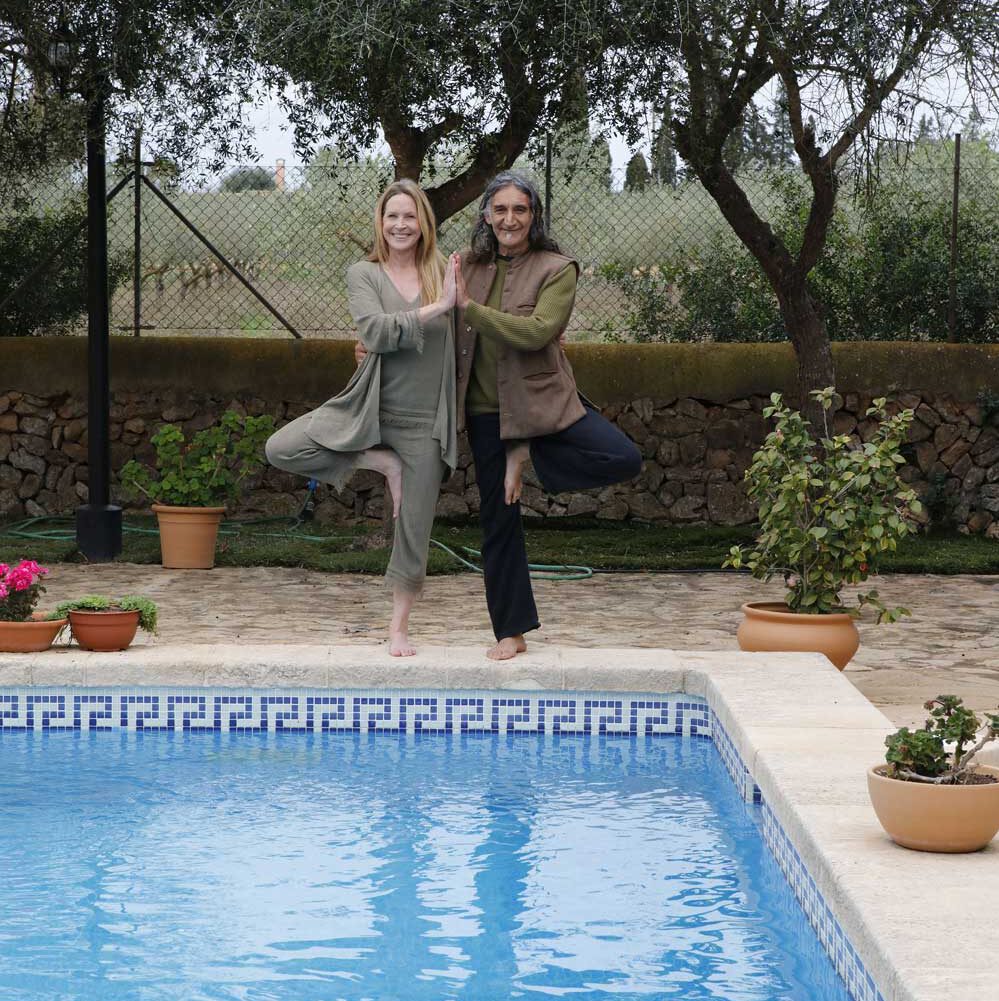
Yoga can help guests become more aware of their breathing, physical tension and the way their body reacts to stress.
Physical activity with our personal trainer Toni can help guests rediscover movement, develop a more positive relationship with their body and experience physical wellbeing without pressure to perform.
Other complementary activities can also form part of the individual programme.
These activities do not replace psychological or medical care. They add another dimension to the process and can help guests experience changes physically as well as intellectually.
More information can be found on our page about complementary therapies for alcohol recovery.
A small group in a personal environment
The environment in which recovery takes place also matters.
Vida Libre deliberately works with very small groups of no more than four guests.
The programme takes place in the relaxed surroundings of a finca in Mallorca, away from many of the routines, pressures and triggers of everyday life.
This creates space for intensive personal work while maintaining an informal and human atmosphere.
Because the group is so small, guests often get to know each other very well.
A family-like atmosphere frequently develops during the stay. Guests eat together, take part in activities together and share experiences during an important period of change.
This sense of connection can become another supportive element of the overall programme.
Connections that often continue afterwards
The relationships created during a stay at Vida Libre do not necessarily end when the programme is over. Many former guests continue to stay in contact with us or with other guests they met during their stay. For some, these relationships remain an important connection after returning to everyday life.
More than simply stopping drinking
Our holistic approach is ultimately based on a simple idea:
Alcohol dependence is rarely only about alcohol.
It is often connected with the way a person deals with emotions, stress, relationships, habits and difficult situations.
That is why recovery should not end with removing alcohol.
The aim is to understand what lies behind the drinking, strengthen personal resources and develop new ways of dealing with life without having to rely on alcohol.
Every person follows a different path.
At Vida Libre, our task is to understand that individual path and to combine the elements that can best support lasting personal change.



More about Vida Libre
Optional activities
In addition to our complementary therapies, we offer you a range of leisure activities such as creative design, Spanish lessons, sightseeing flights or golf.
The Vida Libre Concept
Thanks to our respective training and our commitment we are able to offer you a holistic program treating body, spirit and soul. We provide professional and individual assistance and care. Our ambition is for you to enjoy your stay with us from the start.
Vida Libre video montage
Watch our brief video montage to get an impression of the Finca and its wonderful Mediterranean surroundings, nestled in the quiet countryside of Mallorca.